
Professional Training, Real Results

Professional Housekeeping Standards and Principles

Last Update July 21, 2026
5.0 /5
(5)
10 already enrolled

About This Course

Professional Housekeeping Standards and Principles is a training course designed for individuals who work or wish to work in the Housekeeping department of hotels, resorts, guest houses and other hospitality facilities. It is suitable for room attendants, public area attendants, laundry staff, supervisors, new employees and hospitality staff who want to improve their professional cleaning standards and service quality. The course introduces participants to the importance of Housekeeping in guest satisfaction, hotel reputation, hygiene, comfort and safety. It covers the main responsibilities of the Housekeeping department, including guest rooms, bathrooms, public areas and back-of-house areas, as well as professional appearance, uniform standards, grooming, personal hygiene and communication with guests. Participants will learn the correct use of cleaning materials and chemicals, the importance of pH, dilution, PPE, SDS and safe chemical handling.

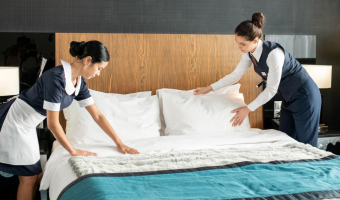
The course also explains hygiene principles, hand hygiene, crosscontamination prevention, microfiber color coding and critical control points such as door handles, light switches, TV remote controls, telephones and bathroom surfaces. In addition, participants will understand the difference between cleaning, sanitizing and disinfecting, and why these processes are essential in hospitality operations. The training also includes practical room cleaning procedures, trolley preparation, bed making, bathroom cleaning, final room inspection, quality control and common professional mistakes to avoid.

Target Audience

  • Students and professionals primarily in Albania, with potential international learners from EU and Middle East.

Curriculum

133 Lessons

CHAPTER 1: INTRODUCTION TO HOUSEKEEPING & PROFESSIONAL STANDARDS

In Chapter 1, we will introduce the foundation of professional Housekeeping. Participants will understand what Housekeeping means, why it is essential in hospitality and how it affects guest satisfaction and hotel reputation. We will also discuss the main responsibilities of the Housekeeping department, the areas that must be cleaned and maintained, and the structure of the team. This chapter also focuses on professional standards, including staff appearance, uniform, grooming, communication, guest privacy, room entry procedures, lost and found, maintenance reporting and shift preparation. The goal of this chapter is to help participants understand that Housekeeping is a professional department based on discipline, organization, hygiene, respect and attention to detail.
TOPICS COVERED IN CHAPTER NO.1
INTRODUCTION TO HOUSEKEEPING & PROFESSIONAL STANDARDS
WHAT IS HOUSEKEEPING?
REMEMBER
WHY IS HOUSEKEEPING IMPORTANT IN HOSPITALITY?
REMEMBER
THE ROLE OF HOUSEKEEPING IN GUEST SATISFACTION
Choose Your Certificate
REMEMBER
MAIN RESPONSIBILITIES OF THE HOUSEKEEPING DEPARTMENT
REMEMBER
AREAS OF RESPONSIBILITY
REMEMBER
HOUSEKEEPING DEPARTMENT STRUCTURE
REMEMBER
MAIN POSITIONS AND DUTIES IN HOUSEKEEPING
PROFESSIONAL APPEARANCE AND UNIFORM STANDARDS
GROOMING AND PERSONAL HYGIENE OF STAFF
REMEMBER
PROFESSIONAL BEHAVIOR AND COMMUNICATION WITH GUESTS
REMEMBER
GUEST PRIVACY AND CONFIDENTIALITY
ENTERING A GUEST ROOM PROCEDURE
LOST AND FOUND BASIC PROCEDURE
FOUND ITEMS
REPORTING MAINTENANCE PROBLEMS
DAILY BRIEFING AND SHIFT PREPARATION
HOUSEKEEPING TROLLEY ORGANIZATION
COMMON PROFESSIONAL MISTAKES TO AVOID
CIRCLE THE CORRECT ANSWER

CHAPTER 2: CLEANING SCIENCE, CHEMICALS, PH, SINNER CIRCLE & SAFETY

In Chapter 2, participants will learn the basic science behind professional cleaning. Cleaning is not only about wiping a surface or using a chemical product. It is a process that requires the correct product, the correct method, the correct dosage and the correct safety measures. This chapter explains the main types of dirt found in hotel rooms, bathrooms and public areas, such as dust, grease, limescale, organic soil and stains. Participants will understand why different types of dirt require different cleaning chemicals and why one product cannot be used for every cleaning task. The chapter also introduces the concept of pH and explains the difference between acidic, neutral and alkaline products. Staff will learn why pH is important when choosing a product and how the wrong chemical can damage surfaces or create safety risks. Finally, participants will learn the basic rules of chemical safety, including labels, SDS, PPE, dilution, storage and accident prevention. The Sinner Circle will also be introduced as a practical model that helps staff understand how chemical action, mechanical action, temperature and contact time work together to achieve effective cleaning results.

CHAPTER 3: HYGIENE, CROSSCONTAMINATION & CRITICAL CONTROL POINTS

In Chapter 3, participants will learn why hygiene is a key part of professional Housekeeping. A room may look clean, but this does not always mean that it is hygienically safe. For this reason, Housekeeping staff must understand how germs spread and how correct cleaning procedures help reduce the risk of contamination. This chapter explains the concept of cross-contamination, which happens when dirt or microorganisms are transferred from one surface or area to another. For example, using the same cloth for the toilet and for the bedside table can spread contamination. This is why color coding, correct cloth handling and hand hygiene are very important in daily cleaning operations. Participants will also learn the importance of hand hygiene and correct glove use. Gloves protect the staff during certain cleaning tasks, but they do not replace handwashing. Hands must be washed or disinfected at the correct moments, especially after cleaning bathrooms, handling waste, removing gloves or touching dirty linen. Another important part of this chapter is the identification of Critical Control Points. These are high-touch surfaces that are frequently touched by guests and staff, such as light switches, door handles, TV remote controls, telephones, taps and elevator buttons. These points require special attention because they can easily become sources of contamination if they are not cleaned and disinfected correctly. The goal of this chapter is to help Housekeeping staff understand that hygiene is not only about appearance. It is about preventing contamination, protecting guest health and maintaining professional cleaning standards.

CHAPTER 4: ROOM CLEANING PROCEDURES, QUALITY CONTROL & PRACTICAL STANDARDS

In Chapter 4, participants will learn the practical procedures used in daily Housekeeping operations. Professional room cleaning must follow a clear sequence so that the work is efficient, hygienic and consistent. When all staff follow the same procedure, the hotel can maintain the same quality standard in every room. This chapter explains the different room statuses used in hotel operations, such as occupied rooms, check-out rooms, vacant dirty rooms and vacant clean rooms. Participants will understand how each room status affects the cleaning procedure and the level of attention required. The chapter also focuses on the step-by-step cleaning process, starting from trolley preparation and room entry, followed by ventilation, waste removal, linen handling, bed making, dusting, bathroom cleaning, floor cleaning, restocking and final inspection. Special attention will be given to high-touch points and areas that guests notice immediately, such as the bed, bathroom, mirrors, towels and room smell. Participants will also learn the importance of quality control. A room should not be considered ready only because it has been cleaned. It must be checked carefully to make sure that it meets the hotel standard. The final inspection helps prevent guest complaints and ensures that the room is clean, safe, comfortable and properly prepared. The goal of this chapter is to help Housekeeping staff apply professional cleaning procedures in a consistent way and understand how practical standards directly affect guest satisfaction and hotel reputation.

FINAL QUIZ

Professional Housekeeping Standards and Principles

Complete Your Feedback Form

Please complete the feedback form before finishing the course.

Earn a certificate

Add this certificate to your resume to demonstrate your skills & increase your chances of getting noticed.
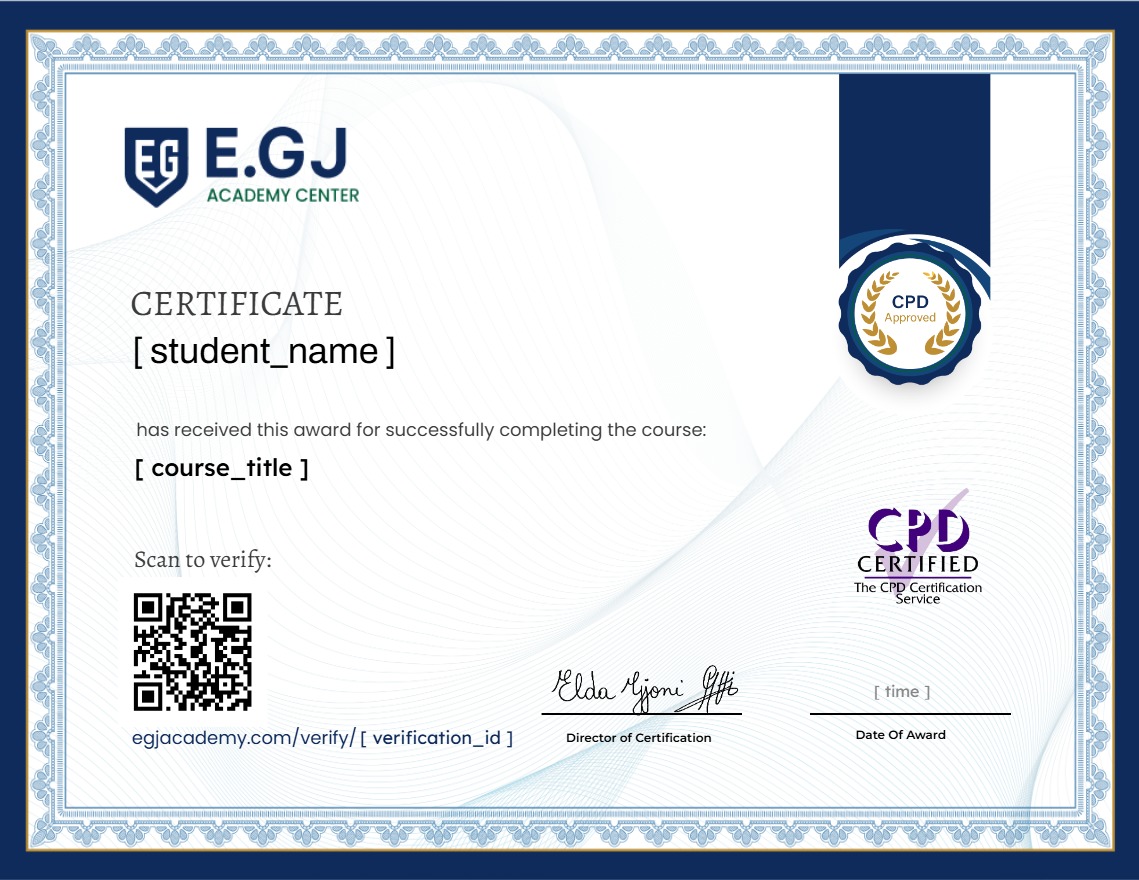
selected template

Student Feedback

5.0
5 Ratings
100%
0%
0%
0%
0%

Reviews (5)

It was amazing and very helpful course

Excellent course! The content was well-structured, practical, and easy to understand. I learned valuable skills that I can apply immediately in my workplace.

Egj Academy the best⭐

Best instructor

Very well explained course

error: Content is protected !!
Select the fields to be shown. Others will be hidden. Drag and drop to rearrange the order.
  • Image
  • SKU
  • Rating
  • Price
  • Stock
  • Availability
  • Add to cart
  • Description
  • Content
  • Weight
  • Dimensions
  • Additional information
Click outside to hide the comparison bar
Compare

Don't have an account yet? Sign up for free

No apps configured. Please contact your administrator.