
What Building E.GJ Academy Taught Me About Turning Experience Into a Business.

What Building E.GJ Academy Taught Me About Turning Experience Into a Business.
Elda Gjoni shares the real lessons behind building a professional training business — from turning expertise into practical systems to learning why consistency, people and clear standards matter more than moving fast.
By Elda Gjoni, Founder & CEO, E.GJ Academy
When you work in an industry for many years, you start to notice things that are not always written in manuals. You see where teams struggle, where standards break down, where customers become dissatisfied and where businesses lose time because a process was never explained properly. Much of this knowledge comes from experience rather than theory, and for a long time, that was exactly how I carried my own knowledge too.
My background has taken me through hospitality, HoReCa, professional training, food safety, consulting and business operations. Over time, I began to realise that many of the problems I had seen repeatedly could be addressed through better training and clearer systems. That thought eventually became one of the reasons I founded E.GJ Academy. I wanted to take what I had learned through real work and turn it into something practical that other professionals could use.
Looking back, starting the academy taught me much more than how to create training programmes. It taught me how difficult it can be to turn experience into a structured business, how important it is to keep improving even when progress feels slow, and why a business becomes stronger when it is built around people, not only processes.
The Business Started With a Problem I Had Seen Again and Again
One thing I kept noticing in hospitality was the difference between having information and knowing how to apply it. Today, information is easy to find. You can search for housekeeping procedures, food safety standards, HACCP principles, customer service advice or management techniques within seconds.
But knowing a rule is not the same as understanding how to use it in a real working environment. I have seen employees who knew what they were supposed to do but did not always understand why a particular standard mattered. When that happens, the process may work when everything is calm, but it can quickly break down during a busy shift or when something unexpected happens.
Take food safety as an example. It is easy to tell someone that cross-contamination must be avoided. The real learning begins when you explain how it can happen, which behaviours create risk, what should be monitored and what action must be taken if something goes wrong. Housekeeping is similar. Cleaning a room is not simply about completing a list of tasks. It involves sequence, hygiene, product use, quality checks, guest expectations and attention to detail.
That gap between knowing and doing became very important to me. I did not want to create training that simply gave people more information. I wanted to create learning that professionals could take back to work and actually use.
Turning My Own Experience Into Training Was Harder Than I Expected
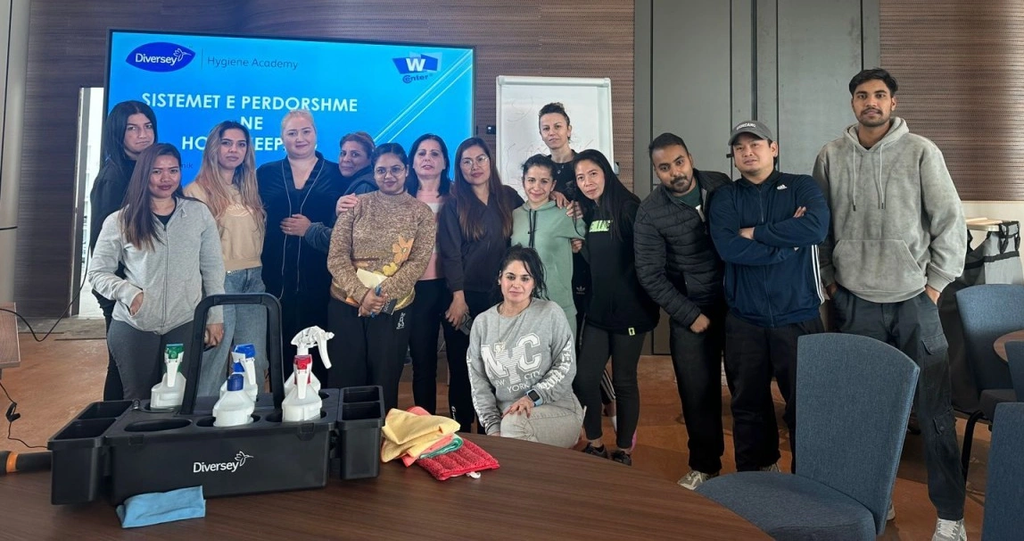
One of the biggest challenges in building E.GJ Academy was taking knowledge that felt natural to me and breaking it down so that someone else could learn it. When you have worked in a field for years, you often solve problems instinctively. You recognise patterns and make decisions without consciously thinking about every step.
But when you are teaching someone, you cannot assume they already know what you know. I had to think carefully about where a learner should begin, which mistakes are most common, which parts of a topic need more explanation and how to make technical information easier to understand without losing its meaning.
That process taught me an important business lesson. If you want to build a company around your expertise, being good at what you do is only the first step. At some point, you have to turn that knowledge into a process, a method or a system that other people can understand and use.
For anyone building a business around professional expertise, I would focus on a few questions:
- What problem do people repeatedly come to me with?
- How do I currently solve that problem?
- Which parts of my approach can be documented or taught?
- What result should the customer or learner be able to see?
- Can someone else understand and repeat the process without depending entirely on me?
I believe these questions are particularly relevant for consultants, trainers, coaches and service-based entrepreneurs. Your expertise has value, but it becomes much more useful when it is organised clearly enough to create results for someone else.
Building the Courses Made Me Focus on Practical Value
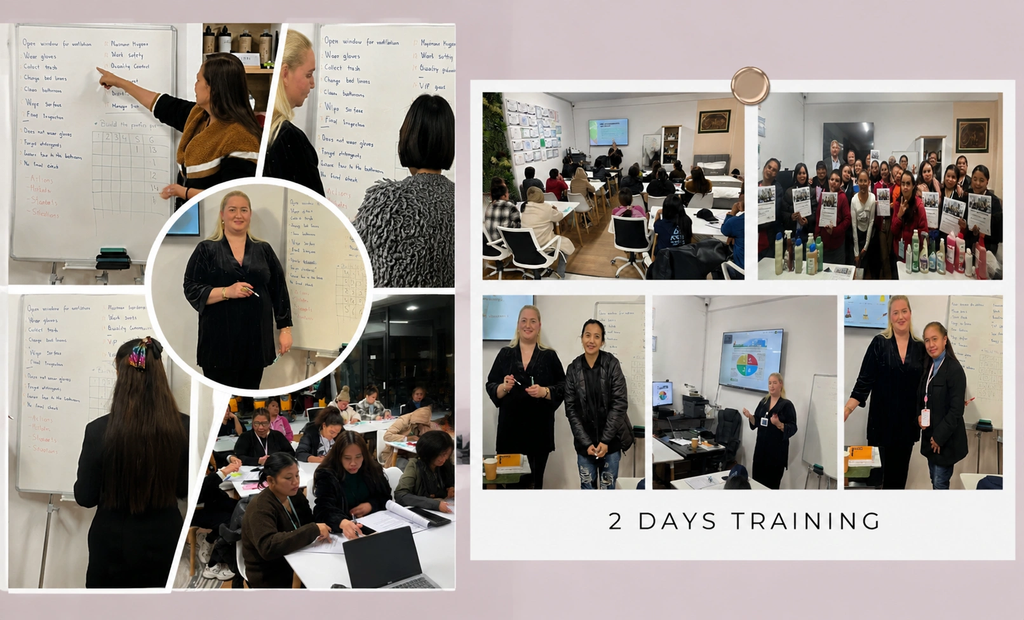
Through E.GJ Academy, I developed two professional online programmes: Professional Housekeeping Standards and Principles and Food Safety Management Systems (FSMS): Principles and Practical Implementation Based on ISO 22000:2018.
Together, the programmes include more than 300 educational slides, structured modules, practical content, quizzes, assessments and professional certification. I am proud of the amount of work that went into them, but the number of slides was never the main objective.
While developing the material, I kept asking myself a very simple question: if someone completes this lesson today, what should they be able to do better tomorrow?
That question helped me stay focused on practical value. It also changed how I think about business in general. Whether you are creating a training programme, a service, a software product or a consulting offer, the customer should be able to understand what becomes better because of what you provide.
If you cannot answer that clearly, there is probably still work to do on the offer.
A Simple Way I Think About Useful Training
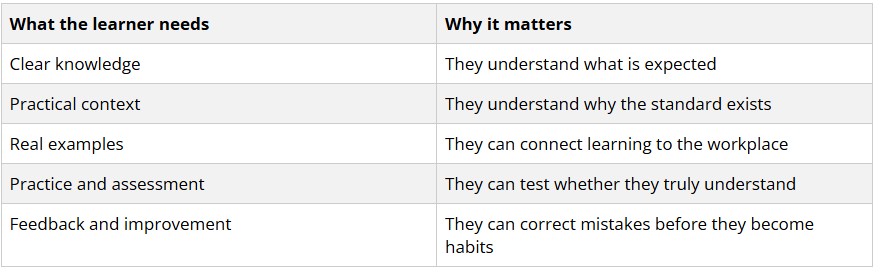
For me, this is where education becomes useful. Information matters, but application is what creates confidence.
Consistency Has Been More Important to Me Than Speed
Like many entrepreneurs, I have had periods where I felt that progress should be faster. You see other businesses launching, growing, hiring or announcing new milestones, and it becomes very easy to compare your own journey with theirs.
My own experience has been much less dramatic. Some things moved quickly, while others took much longer than expected. There were parts of the business that only became clearer after I started building them, and there were ideas I had to adjust along the way.
Over time, I stopped looking at speed as the main measure of progress. I started valuing consistency much more.
The approach I try to follow is simple:
Learn → Structure → Apply → Measure → Improve
I continue learning, organise what I have learned, put it into practice, look at the result and then improve what is not working well enough. This may not sound exciting, but it has helped me more than trying to move quickly for the sake of appearing busy.
A business does not need to begin in its final form. In many cases, you understand your business much better after working with real clients than you did when you first created the plan.
I Learned Not to Wait for the Perfect Moment
One of the easiest ways to delay something you want to build is to keep telling yourself that you need one more thing before you can begin. It may be more experience, a better website, more money, a bigger audience or a more polished product.
I understand that feeling because I have experienced it too. There is always something that can be improved, and when you care about quality, it is natural to want everything to be right.
What I have learned is that high standards and perfectionism are not the same thing. High standards help you improve. Perfectionism can sometimes stop you from moving.
At some point, you have to take the best version you have, put it in front of real people and learn from what happens. That does not mean lowering your standards. It means accepting that some improvements only become visible once people start using what you created.
For another entrepreneur, my advice would be to avoid waiting for complete certainty. Build carefully, test responsibly and learn from real feedback. The first version does not need to be the final version, but it should solve a real problem well enough to deserve the customer’s attention.
If Everything Depends on You, the Business Is Still Fragile
My experience in hospitality taught me how risky it can be when too much knowledge sits with one person. In many businesses, one experienced employee knows how a particular task should be done, another person knows how to solve a certain customer problem, and someone else understands a process that was never properly documented.
The same thing happens when you start a business. At the beginning, the founder often does almost everything. You know how to speak to clients, how the work should be delivered, how problems are handled and what quality should look like.
That may be necessary in the early stages, but it becomes a problem if the business grows and all of that knowledge is still only in your head.
I would encourage entrepreneurs to document important processes earlier than they think they need to. You do not need complicated manuals, but you should gradually create clarity around the work that happens repeatedly.
Useful areas to document include:
- how new clients are onboarded;
- how work or training is delivered;
- how quality is reviewed;
- how common problems are handled;
- who is responsible for important decisions;
- what a good result should look like.
For me, that is one of the differences between doing work yourself and building a business. A strong business should gradually become capable of delivering quality without the founder supervising every small decision.
Invest in People Before There Is a Problem
In hospitality, I have seen training become urgent only after something goes wrong. A guest complains, an audit identifies a weakness, a mistake happens or a service issue becomes serious enough that management has to respond.
I believe training works better when it happens before that point.
People need clear expectations, useful feedback and enough context to understand why their role matters. If someone knows only what task to complete, they may follow the process mechanically. If they understand how their work affects the customer, the team and the business, they are much more likely to take ownership.
I think this applies to every entrepreneur who starts building a team. Do not give people tasks without also giving them context. Explain what good work looks like, why certain standards matter and how their role contributes to the bigger picture. Give feedback early rather than waiting until a mistake becomes serious.
A strong team is not created only by hiring good people. It is created by helping good people understand how to succeed inside your business.
Before Chasing More Growth, I Would Ask These Questions
Entrepreneurs spend a lot of time thinking about sales, marketing and acquiring more customers. I understand why. Growth is important, and every business needs customers.
But I have also seen businesses chase more demand when the real problem was happening inside the operation. Before spending more money on growth, I would first ask:
- Can the current team comfortably handle more customers?
- Are roles and responsibilities clear?
- Are important processes documented?
- Can someone else deliver the same standard of service?
- Are the same mistakes happening repeatedly?
- Is the founder still involved in every small decision?
- Are customers receiving a consistent experience?
- Are we fixing operational weaknesses or simply adding more demand?
If the answers are uncomfortable, more customers may only make those problems more visible.
Sometimes the best growth decision is to stop and strengthen what is already there. Improve the process, train the team, clarify responsibilities and remove unnecessary dependence on one person. Then growth becomes much easier to manage.
Food Safety Taught Me a Lot About Business Culture
My work in food safety has influenced the way I think about business culture as well. A company can have excellent policies, certificates and procedures, but the real standard is what people do when nobody is watching.
Food safety makes this very clear. A business may have HACCP procedures, monitoring systems and documentation, but those tools only work if people understand them and use them consistently. A certificate on the wall cannot protect a business if daily behaviour does not match the standard.
I think company values are very similar. A business can say that it values integrity, quality or customer care, but those words mean very little unless they influence real decisions. The real culture appears in the way people respond to mistakes, communicate under pressure and treat customers when something has gone wrong.
For entrepreneurs, this is important because culture starts much earlier than many people realise. The behaviour you accept in the beginning often becomes part of the business later.
AI Will Help Hospitality, but It Will Not Replace Human Judgement
I believe the next three to five years will bring major changes to hospitality through artificial intelligence, automation, digitalisation and online professional education. AI will help businesses analyse information, automate repetitive work, improve communication and support training.
I see this as an opportunity. Professionals who learn how to use these tools well will be able to work more efficiently and make better use of their time. At the same time, hospitality will remain a human industry. A guest remembers how they were treated, a team remembers how they were managed and difficult situations still require empathy, judgement, communication and responsibility.
This is why I do not see the future as a choice between people and technology. The strongest professionals will be those who know how to combine both.
What I Believe Will Matter More Over the Next Few Years
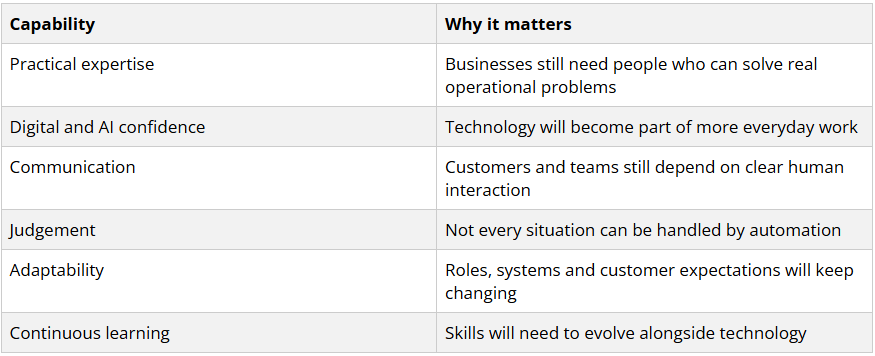
I would give the same advice to entrepreneurs. Learn how AI can support your business, but do not let it replace the thinking, judgement and human relationships that make your business valuable.
Skilled People Will Become Even More Valuable
One of the biggest challenges I see in hospitality is the shortage of skilled and properly trained professionals. This creates pressure for employers, but it also creates a real opportunity for people who are willing to develop themselves.
I often tell professionals not to focus only on collecting certificates. Qualifications are useful, but eventually an employer needs to know whether you can apply what you learned.
Can you solve a problem? Can you communicate clearly? Can you maintain standards when the workplace is busy? Can you adapt? Can you work well with others? Can you use digital tools without losing your professional judgement?
These are the skills that make someone valuable over time.
Entrepreneurs should think about their companies in the same way. Do not build a business that only looks strong from the outside. Build real capability inside it.
What I Would Tell Someone Starting a Business From Their Expertise
If I were sitting across the table from someone who wanted to turn their professional experience into a business, the first thing I would tell them is to start with a problem they understand deeply.
Do not begin by asking what kind of business is fashionable. Look at your own career and ask which problems you have seen repeatedly. Which issues do people regularly ask you for help with? Which mistakes do you notice that others overlook? Those areas can often point you towards a business opportunity that is genuinely connected to your experience.
From my own journey, these are the lessons I would share:
- Start with a real problem. A business becomes stronger when it solves something people genuinely care about.
- Turn your experience into a process. What feels obvious to you may need to be documented before someone else can use it.
- Test usefulness early. Ask what becomes better for the customer because of what you provide.
- Do not confuse activity with progress. Being busy is not the same as improving the business.
- Listen to patterns, not every opinion. Feedback matters, but repeated customer behaviour is often more useful than isolated comments.
- Build systems before you desperately need them. This becomes especially important once a team starts growing.
- Keep learning. Customers, employees and changing markets will continue teaching you things planning alone cannot.
I still use these principles myself. Entrepreneurship does not reach a point where everything becomes completely clear. You continue learning while you build.
My Definition of Success Has Changed
When people talk about entrepreneurship, success is often measured through revenue, growth, recognition or expansion. These things matter, and every business needs commercial sustainability.
But my own definition of success has become broader.
I value creating something that is genuinely useful. I value seeing people understand a subject better because of the training they received. I value helping organisations raise standards and helping professionals feel more confident in their work.
That gives the business a deeper purpose for me.
Through E.GJ Academy, my goal is not simply to provide courses. I want to contribute to a stronger culture of professional development, continuous learning and service excellence in hospitality.
Albania and the wider region have significant hospitality potential, but long-term growth will depend on more than investment and tourism numbers. It will also depend on the quality of people, the standards they follow and how seriously businesses take professional development.
The Lesson I Keep Coming Back To
If there is one thing I would leave with another entrepreneur, it is not to underestimate the value of what you have already learned through experience. The problems you have solved, the mistakes you have witnessed, the systems you have improved and the difficult situations you have worked through can become valuable when you organise those lessons and use them to help someone else.
Your experience might become a service, a course, a consulting framework, a product or simply a better way of running your own company. It may also help another entrepreneur avoid a mistake that took you years to understand.
What matters is that you make that experience useful.
I am still learning, still improving E.GJ Academy and still discovering better ways to turn professional knowledge into practical education. For me, that is part of entrepreneurship too. You do not reach a point where the learning stops. You keep building, listening and improving.
In my experience, consistency takes you much further than trying to move fast simply because everyone else appears to be doing so.
About the Author
Elda Gjoni is the Founder and CEO of E.GJ Academy and a hospitality and HoReCa consultant working across professional training, auditing, business development and operational improvement. With academic backgrounds in Law and Business Administration, she brings a multidisciplinary perspective to hospitality operations, professional education and business consulting.
She is HACCP Certified and has experience in international food safety standards, hotel and restaurant operations, startup development, professional training and export-focused business management. Her work focuses on helping professionals and organisations strengthen operational standards, improve service quality, develop capable teams and create practical systems that can be applied consistently in real working environments.
Through E.GJ Academy, Elda aims to make hospitality education more practical, accessible and relevant while contributing to a stronger culture of continuous learning and professional excellence.